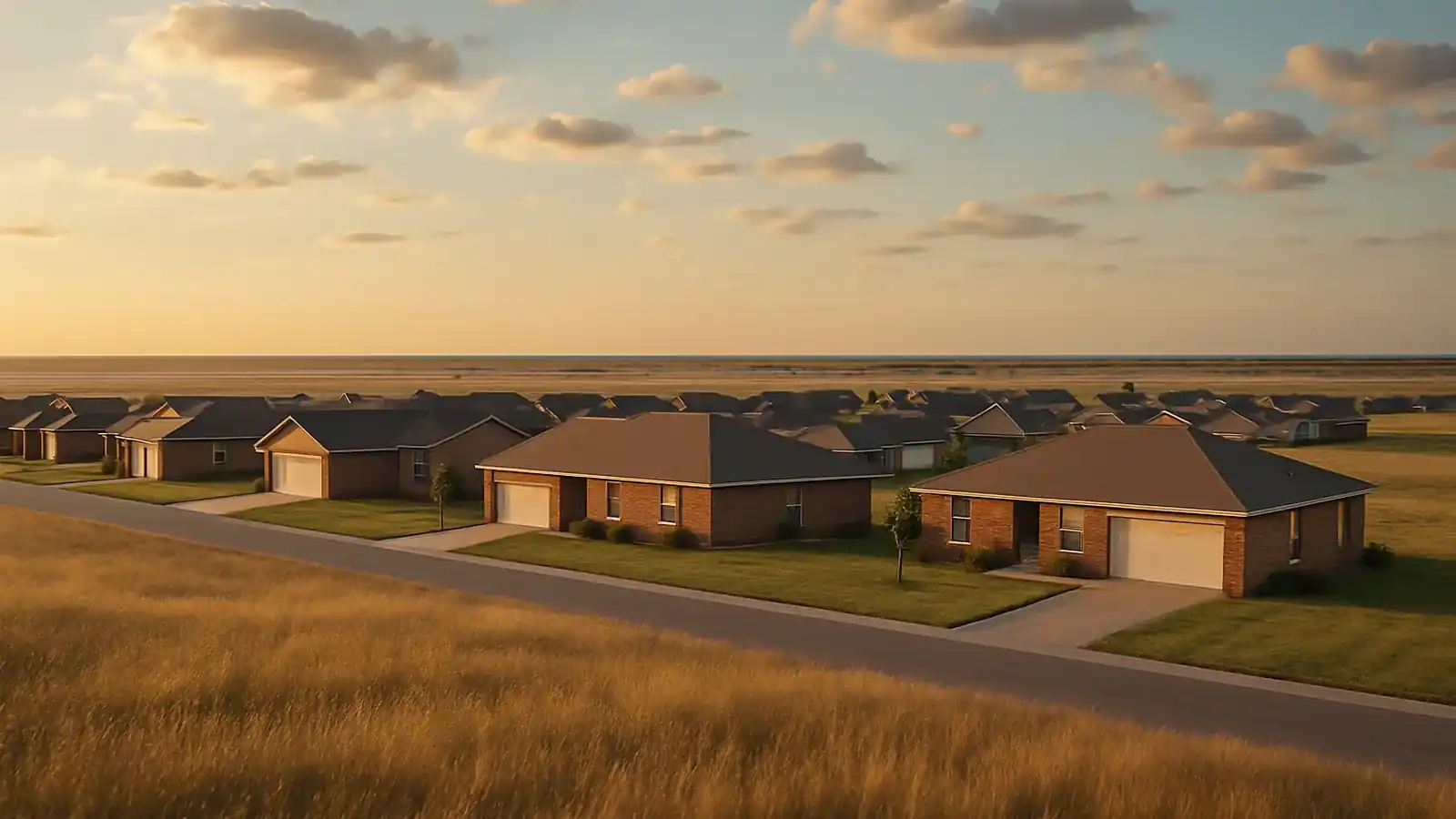
Wichita Foundation Co. serves Wichita plus Derby, Andover, Haysville, Park City, Bel Aire, Valley Center, Goddard, Maize, and Mulvane: a good evaluation is measured, with the moisture-story walk, ring-wide.
Choose your community
DerbyAndoverHaysvillePark CityBel AireValley CenterGoddardMaizeMulvane
Every town we cover, and what changes there
Each of these has its own page, because the ground and the housing stock are not the same across the region. The short version:
Derby: Growth on the river's shoulder
Derby's boom decades stacked subdivisions along the Arkansas River corridor: newer builds on graded pads, a slab-and-basement mix, and lawns irrigated hard against Kansas summers. Read what that means for a Derby property.
Andover: Estate lots, estate amplitude
Andover's growth ran east with bigger builds: walk-out basements, three-car slabs, landscaping that drinks all summer. Read what that means for an Andover property.
Haysville: Small-town stock, full-size clay
Haysville's housing runs practical: 1950s-70s ranches, manufactured homes on the fringes, working lots without estate irrigation budgets. Read what that means for a Haysville property.
Park City: Open prairie, honest exposure
Park City's mix (postwar-to-90s subdivisions, working properties near the I-135 corridor) sits on open ground with little canopy, which means the fat clay runs full seasonal amplitude: hard bake, hard swell, repeat. Read what that means for a Park City property.
Bel Aire: Two generations on one clay
Bel Aire pairs its 1970s-90s core with steady new infill, which puts thirty-year foundations and three-year foundations on the same expansive ground, aging on different schedules. Read what that means for a Bel Aire property.
Valley Center: Edge-of-town amplitude
Valley Center's newer subdivisions push into open farmland, and open is the operative word: no urban shade, full wind exposure, and fat clay running its complete seasonal repertoire under young foundations. Read what that means for a Valley Center property.
Goddard: The newest clocks in the ring
Goddard's growth spurt is the ring's youngest: subdivisions barely into their first decade, graded pads still settling into their new moisture equilibrium, builder warranties expiring on schedule. Read what that means for a Goddard property.
Maize: Growth at school-district speed
Maize's district reputation pulled subdivisions across its prairie faster than almost anywhere in the ring: whole neighborhoods sharing construction years, grading passes, and therefore future settlement calendars. Read what that means for a Maize property.
Mulvane: Old town, new ring
Mulvane layers a genuine old core (early-1900s masonry near the historic downtown) with casino-era subdivision growth, all along the Arkansas River corridor's moodier moisture tables. Read what that means for a Mulvane property.
Same clay, different swings
The fat clay reads locally: Derby and Andover run the irrigation-differential experiment, Haysville and Park City take the open-prairie amplitude straight, Goddard and Maize wind their young fill clocks, Mulvane layers century masonry over corridor moisture. Each page above reads its own chapter; the evaluation reads your specific lot. Outside the ring? Ask: travel should be quoted honestly.
Amplitude by corridor
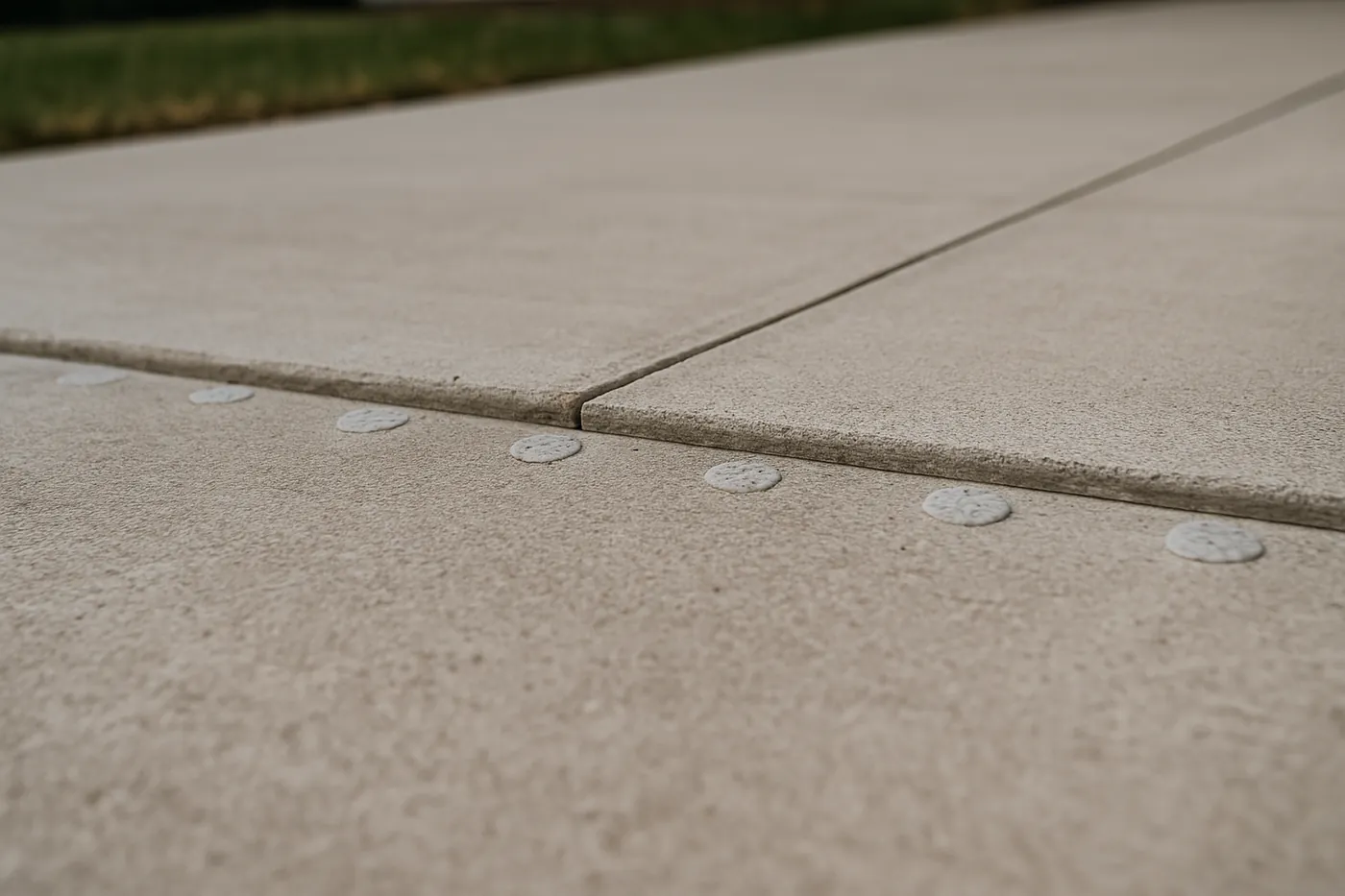
The volume swing that drives everything here isn't uniform across the ring. The irrigated-suburb corridor (Derby, Andover, Bel Aire) runs a man-made experiment: lawns watered all summer next to foundation soil left dry, creating the sharpest short-distance moisture differentials in the metro and the classic corner-settlement pattern. The open-prairie corridor (Haysville, Park City, Valley Center, Mulvane) takes the full natural cycle without shade or irrigation to buffer it: bigger seasonal swings, more symmetrical movement. And the young-fill corridor (Goddard and Maize, where fields became subdivisions inside two decades) adds fill consolidation on top of the clay cycle, two clocks ticking at different speeds under one slab. The evaluation names which corridor logic applies to your lot, because the pier depths and the water plan differ by corridor.
Slab or basement, the clay finds you
Wichita splits roughly between slab-on-grade and basement construction, and the clay writes a different failure story for each. Slab homes report movement fast (cracked tile lines, doors racking within a season of a bad drought) because nothing buffers the slab from the soil; their fix menu leans piering and moisture control. Basement homes hide movement longer but fail bigger: tall walls holding back saturated clay, the bowing-wall pattern that is this metro's signature repair. Both stories end at the same evaluation; the instruments just get pointed at different surfaces. Every town page above says which housing stock dominates its streets and what that predicts.
What it means when we say we cover a town
It means we pass your request to a local specialist for an evaluation at your address, on the same terms as in Wichita. Ask for the same laser floor survey and crack measurements, a written scope afterwards, and travel quoted as its own line rather than buried inside the others. If a job is far enough out that travel is material, ask to see that number before you agree to anything.
Foundation work is scheduled, not urgent, so ask whether an outlying address changes the timing.
These 9 communities share ground this site covers in enough depth to describe before anyone arrives. That is the honest boundary: not a radius drawn on a map, but the places whose soil and housing stock we explain here.
Coverage questions
Is there an extra charge to come out to the outlying towns?
Ask for travel to be quoted as its own line when it applies, and to see it before agreeing to anything. It should not be folded into the price of the work, because a scope you cannot read is a scope you cannot compare against anyone else's.
My address is not on the list. Is it still covered?
Usually, and it is worth asking. The list is the area this site covers in depth, not a hard boundary. Somewhere between two of these towns is almost always a yes.
Is the first visit free, everywhere on this list?
Many local specialists don't charge for the first visit, but it depends on the company. Ask when the specialist calls, before they come out. Ask for the laser floor survey, crack measurements and written findings whether or not you go ahead, and whether or not the specialist ends up quoting the work.
Why does the price differ between towns for the same job?
Because the ground does. Each town page above explains what changes locally, and the quote follows what the visit measures at your specific address rather than an average for the region.
Get a Wichita foundation evaluation
Tell us what the house is doing (a crack that grew, a door that quit closing, a slab that dropped) and we'll pass your request on for an evaluation. A local specialist who works in Wichita will call you back.