
Exterior foundation waterproofing in Wichita seals the wall but demands full-depth excavation; interior perimeter drainage runs $2,500–$8,000 and relieves water at the footing. Because fat clay swells against basement walls when saturated, most occupied homes pair interior drainage with grading fixes.
What each buys, what each disturbs, and how a foundation repair scope changes the math.
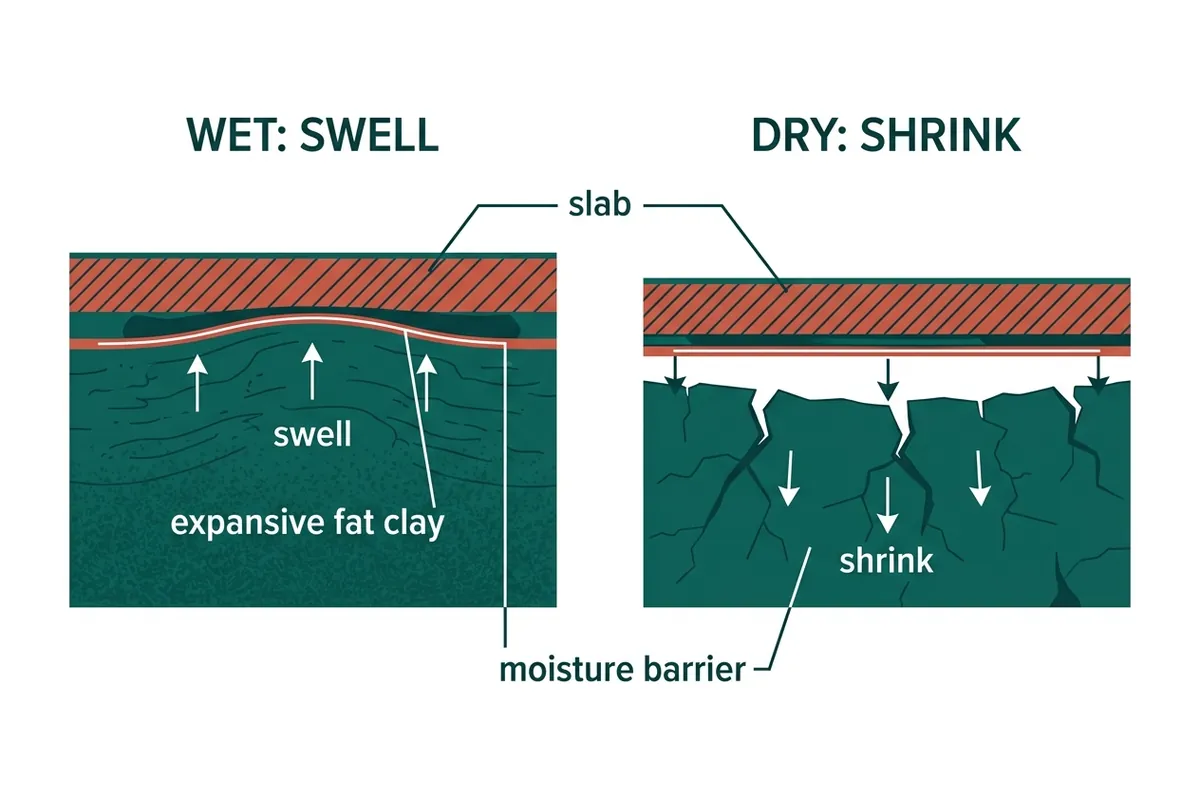
The Wichita twist: your water problem is a soil problem
A wet basement wall here rarely means the wall failed — it means the clay outside got saturated, swelled, and pushed water and pressure at the structure together. That’s why this site calls moisture management the most Wichita repair there is: flattening the wet-dry swing protects the wall, the footing, and the slab at once. Waterproofing choices sit inside that bigger picture, and the moisture management page carries the sump, discharge, and drainage detail this comparison builds on.
The two approaches, honestly compared
| Exterior membrane | Interior drainage | |
|---|---|---|
| What it promises | Water never enters the wall | Water never crosses your floor |
| Wichita cost | Per wall — excavation dominates | $2,500–$8,000 full perimeter |
| Disruption | Full-depth dig through beds, walks, fences | Interior slab-edge work, days |
| Swell pressure | Sealed, but pressure stays on the wall | Relieved at the footing — water gets an exit |
| Season limits | Weather-dependent excavation | Any month, finished basements included |
| Best call when | The wall is already open for repair work | The house is occupied and the basement finished |
Where waterproofing meets foundation repair
The junction case is common here: a basement wall taking enough swell pressure to bow needs restraint, and restraint work sometimes opens the exterior anyway — at which point membrane and footing drain go in for the cost of materials, because the expensive part was the hole. The same logic runs in reverse: if nothing else requires excavation, buying a dig purely for waterproofing is usually the wrong trade when interior drainage delivers a dry floor without one. Sequencing these right is a scope question — the cost guide prices both paths side by side.
Before either: the outside walk
Every wet-basement evaluation here starts at the downspouts, because concentrated roof water is Wichita’s cheapest foundation problem and its cheapest fix. Extensions, grading that falls away from the wall, and a working discharge line solve a share of “waterproofing” calls outright — and when they don’t, they still shrink the system the basement actually needs. If the swing has already moved the structure itself, that’s the settlement conversation, and it changes the order of operations.
What the system needs from you afterward
Drainage work fails from neglect long before age. Once a year, clear the discharge outlet, confirm water still runs well away from the house, and walk the perimeter after the first heavy storm to spot any channel the runoff has re-cut back toward the foundation. Clean the gutters — on a grade-level fix they are part of the system, not an accessory. If a sump is involved, test it with a five-gallon bucket instead of trusting the light. And hold the other half of the job through summer: on bentonite-bearing clay, even perimeter moisture in drought does as much for the foundation as the drainage does in spring.
Waterproofing questions, straight answers
Which approach fits Wichita's clay problem better?
Interior drainage plus moisture management, most of the time. Wichita basements take water pressure when the fat clay swells saturated — a soil problem as much as a water problem. An interior perimeter system at $2,500 to $8,000 relieves pressure at the footing and pairs with the grading and gutter work that flattens the swing driving everything.
Doesn't exterior waterproofing fix it permanently?
It seals the wall — which is real — but it doesn't stop the clay from swelling against it, and it requires excavating the full wall depth through landscaping and flatwork. On an occupied Wichita house the disruption usually outweighs the gain. Where a wall is already open for other work, membrane while you're there is an easy yes.
What does each cost here?
Interior perimeter drainage with a sealed sump runs $2,500-$8,000 for most Wichita basements. Exterior work is priced per wall after access is assessed, because excavation — not membrane — dominates the cost. Downspouts, grading, and discharge corrections come first at either path, and sometimes they're the whole answer.
Will an interior system dry the wall itself?
An interior system won't dry the wall itself, and an honest bid says so. Interior drainage intercepts water at the footing and removes it before it reaches the slab — your floor stays dry, but the wall still sees soil moisture. Exterior membrane is the only thing that dries the wall face. For finished basements here, dry-floor-managed-pressure is usually the right trade.
Does the 24-inch frost depth change anything?
It helps the interior case. Footings and drains here sit below a modest 24-inch frost line under the Sedgwick County code, so interior systems live well below frost and ignore winter entirely. Exterior coatings ride the backfill, which resettles and works against them season over season — one more quiet argument for managing water where it collects.
Get a free Wichita foundation evaluation
Tell us what the house is doing — a crack that grew, a door that quit closing, a slab that dropped — and we'll schedule an evaluation with photos and crack measurements. We reply the same business day.