
Foundation settlement repair in Wichita runs $3,000–$12,000 for most homes, using piers at $1,200–$3,000 each where a laser survey shows the footing dropped. The metro’s bentonite-bearing fat clay shrinks hard in dry cycles — up to ~30% by volume — and settlement is the house following it down.
The drought mechanics, the slab-versus-basement difference, and what repair involves.
Settlement on fat clay: a drought problem wearing a foundation costume
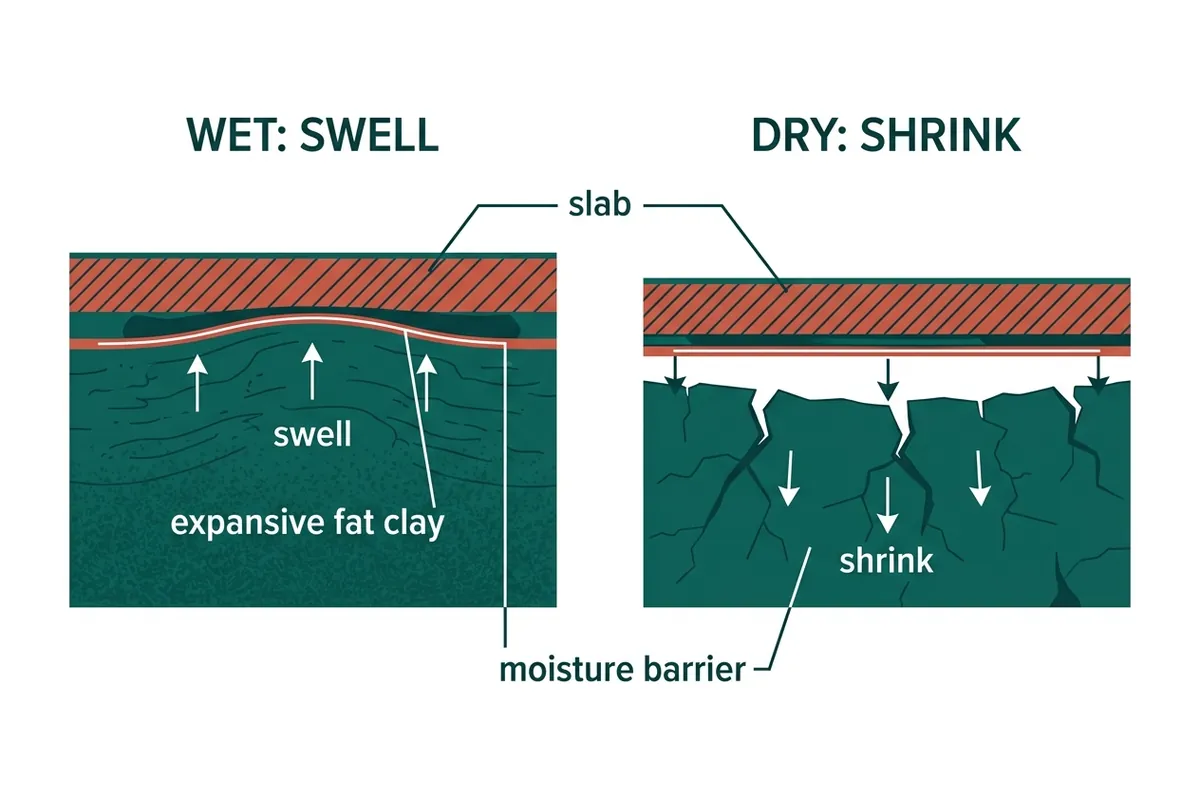
Wichita’s soil story is volume. The clay under the metro contains bentonite, and between a saturated April and a baked August it can swing roughly 30% in volume — the accordion the rest of this site keeps describing. Settlement is the shrink half: dry months pull moisture out, the clay contracts and drops away from the footing, and the house eases into the gap. It never comes all the way back on the swell, because the gap silts in and the soil re-packs a little lower each cycle.
Where it bites is uneven. The south and west exposures bake first; a footing run shaded by the house or watered by a flower bed holds. That difference between one wall dropping and its neighbor holding is differential settlement — the version that cracks brick, racks door frames, and prices repairs.
Slab home or basement home — how the same failure reads
| Symptom | Slab-on-grade house | Basement house |
|---|---|---|
| First warning | Floor cracks, tile lines opening, doors drifting | Stair-step cracks in block or brick |
| Where stress shows | Drywall cracks off door and window corners | Racked frames upstairs, wall cracks below |
| What hides it | Flooring over the slab — damage stays invisible longer | Finished basement walls covering the block |
| How we measure | Laser floor elevations room by room | Elevations plus wall plumb and crack gauging |
| Typical repair | Fewer piers — lighter loads — plus interior slab lifting | Perimeter piers; wall restraint if the swell is pushing too |
Wichita is genuinely both cities at once — slab subdivisions across the west and south, basement stock through College Hill and the older core — and the diagnosis has to know which house it’s standing in. The slab-specific playbook has its own page.
How the repair works
Steel piers transfer the footing’s load below the active clay — the depth band where moisture swings actually operate, commonly 12 to 25 feet here — to strata that don’t trade volume with the weather. Placement follows the survey, not a spacing chart; counts cluster on the dropped run. Lift is attempted where the structure can take it and monitored against crack widths as it goes. The mechanics, bracket types, and refusal logging live on the piering page; which pier type fits which house is the helical-versus-push question.
What moves the number
- Displacement — how far the footing traveled before anyone measured.
- Pier count and depth — set by the affected run and where stable strata sit under your block, not by house size.
- Slab or basement — lighter slab loads often mean fewer piers; basement stock may add wall restraint if swell pressure is working too.
- The moisture story — grading, gutters, and irrigation habits either steady the clay or keep the cycle running; moisture management often belongs in the same scope.
The cost guide prices all of it line by line, including what pushes a job from the $3,000 end toward $12,000.
The first year after the piers
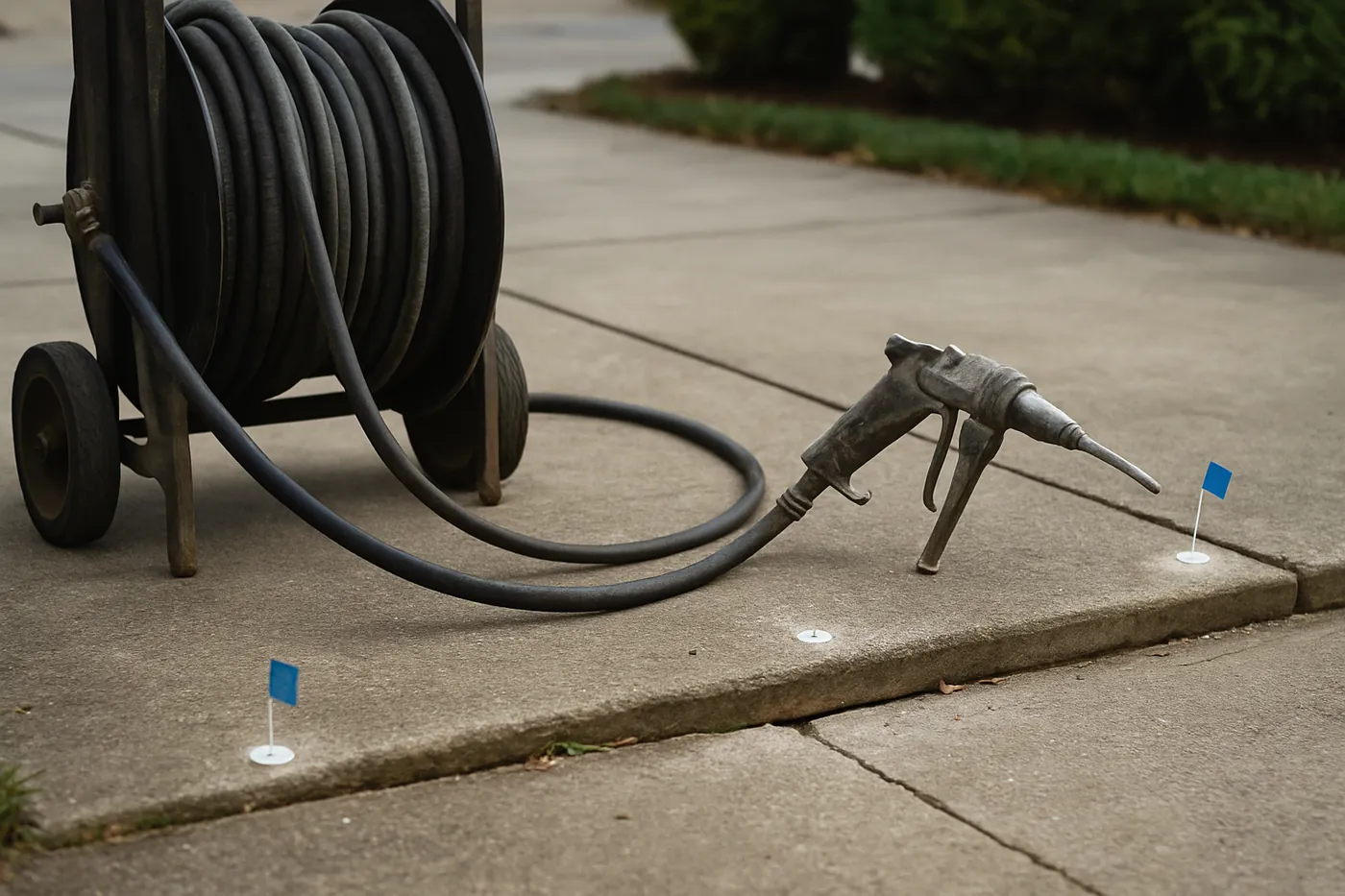
Piers stop the movement; they don’t erase its history. Give the house one full wet-and-dry cycle before chasing cosmetics — and on fat clay that can change volume by roughly 30%, that cycle is the widest input the house receives. Hairline cracks breathe through it, so patch drywall and re-point brick after a complete year and you patch once. Monitoring costs nothing: a dated photo plus a pencil line across each crack answers “did it move?” in seconds. Then keep perimeter moisture even through the dry months. Soaker hoses are not a repair, but on bentonite-bearing clay a perimeter that never bakes hard is the cheapest protection available for every part of the house that never got a pier.
Settlement questions, straight answers
Why do Wichita houses settle hardest in dry years?
Because bentonite gives back the volume it borrowed. Fat clay here can change volume by roughly 30% between saturated and baked, and a run of dry months pulls the soil down and away from footings. The house follows the shrinking side — commonly the sun-baked south or west run — while the shaded side stays put. That difference is the damage.
How is settlement different in a slab home versus a basement home?
Same soil, different first symptom. Slab homes telegraph through the floor: cracked tile lines, drywall cracks off door corners, doors swinging themselves shut. Basement homes show stair-step block cracks and racked frames upstairs. Slab settlement often hides longer because there's no basement wall to read — which is why the laser survey matters more, not less.
Can I just water the foundation like my neighbor does?
Soaker hoses can slow the shrink during a hot stretch, and plenty of Wichita homeowners run them. But irrigation is a throttle, not a repair — uneven watering creates its own differential movement, and a footing that has already dropped doesn't float back up. Once elevations show real displacement, the fix is bearing, not moisture.
How fast does settlement progress here?
In steps, not a slide. Each dry cycle takes a little more, each wet cycle gives a little less back, and the net loss accumulates season over season. A half-inch low spot after one drought summer can be an inch and a half after three. Cost tracks displacement, so measuring early is the cheapest decision on the whole timeline.
What does settlement repair cost in Wichita?
Most full repairs run $3,000 to $12,000, built from piers at $1,200 to $3,000 each — placed only where the survey shows the footing actually moved. Slab homes often need fewer piers than basement stock because the loads are lighter. Every scope is priced per pier location in writing before work starts.
Get a free Wichita foundation evaluation
Tell us what the house is doing — a crack that grew, a door that quit closing, a slab that dropped — and we'll schedule an evaluation with photos and crack measurements. We reply the same business day.