
Slab foundation repair in Wichita runs from $500–$2,500 for interior foam lifting to $3,000–$12,000 for perimeter piering at $1,200–$3,000 per pier. On bentonite fat clay, slabs both heave and settle — the laser survey tells which, and the two take opposite repairs.
Slab failure modes on this clay, the leak trap, and how each fix is chosen.
Why slab homes and fat clay have a complicated relationship
A slab-on-grade house rides directly on the soil across its whole footprint — no basement walls, no crawl space, nothing between the living room and the clay but four inches of concrete. When Wichita’s soil trades its ~30% volume between wet and dry, the slab is the instrument that records it. Perimeter edges dry fastest and drop; centers stay moist under the house and hold, or heave when water arrives. The result is a floor that’s a topographic map of the moisture under it.
The frost side is modest here — footings need 24 inches under the Sedgwick County code — so the enemy isn’t deep frost, it’s the wet-dry accordion. That’s why the west- and south-side slab subdivisions, with full sun and young trees, log more seasonal movement than the shaded older core.
The three slab failures, and the fix each one takes
| Failure | What’s happening | The repair | Typical range |
|---|---|---|---|
| Edge settlement | Perimeter clay dries and shrinks; footing follows | Perimeter piers to stable strata | $1,200–$3,000 per pier |
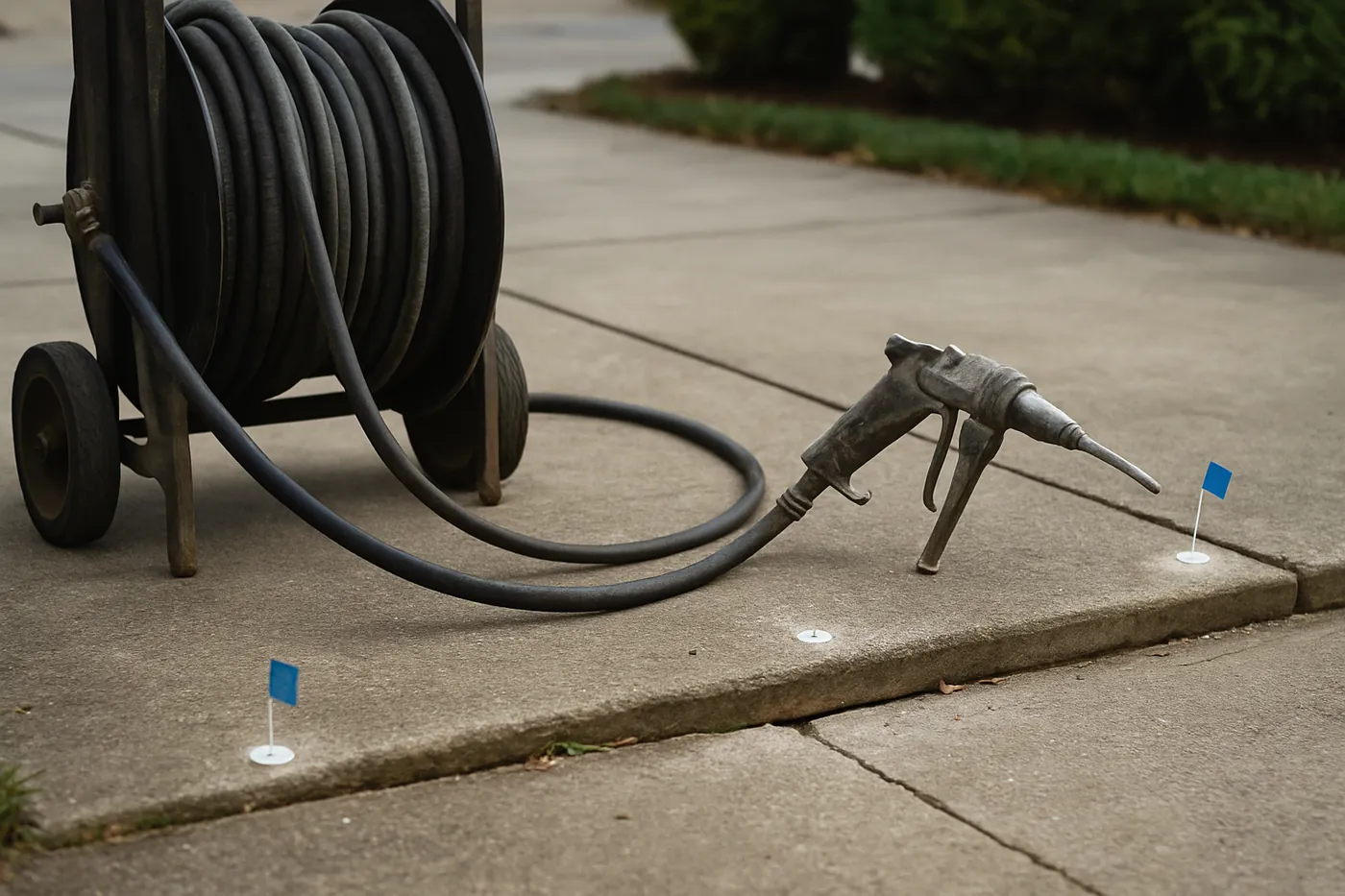
| Interior dishing | Slab section drops over a void or soft fill | Polyurethane lift through penny-size ports | $500–$2,500 |
| Center heave | Moisture under the slab — often a leak — swells the clay upward | Fix the water first, then relevel what remains | Priced after the plumbing repair |
Heave is the one that punishes guessing. Pier a heaving slab and you’ve anchored the house against a floor that’s still rising. The elevation survey separates the three before any steel or foam is ordered — and cracks that accompany any of them get injection and stitching once the movement is resolved.
The under-slab leak trap
Supply and drain lines run beneath Wichita slabs, and a failed line is the classic local heave engine: the clay over-drinks, the floor humps along the wet run, and the damage grows until someone connects the water bill to the hallway. If your floor moved up, or moved fast, plumbing is suspect number one — and a sudden line failure changes the insurance conversation entirely, so document the leak before it’s repaired away.
What a slab evaluation covers
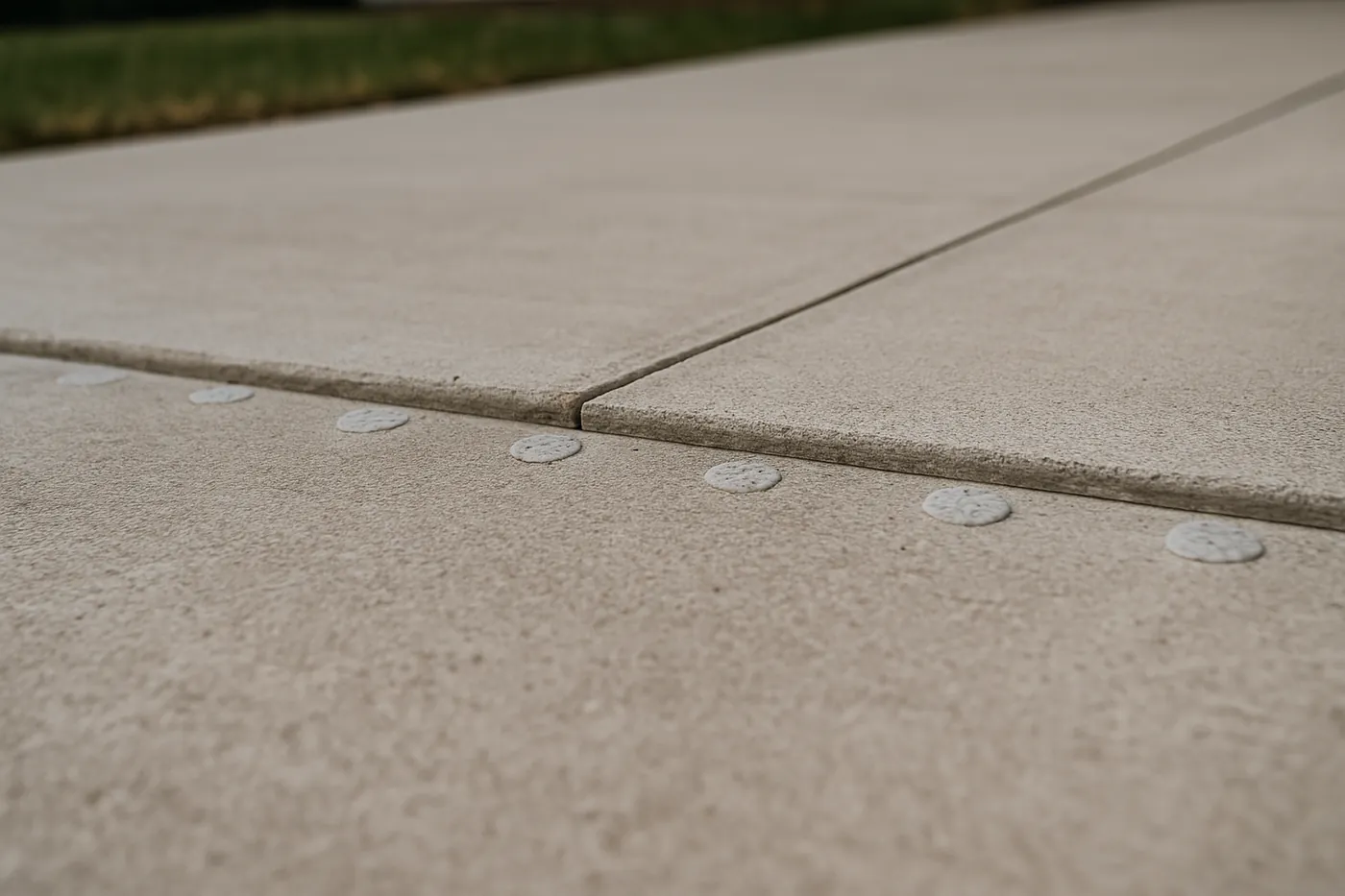
Laser elevations room by room, crack mapping with widths, a moisture read at suspect zones, and the drainage walk outside — free, in writing, with each fix priced per line. Where the answer is “shrinkage cracks, watch them,” that’s what the report says. The cost guide shows how slab scopes price against basement work, and the settlement page covers the drought mechanics driving the whole show.
After the slab work: what to watch
A lifted or stabilized slab is back in tolerance, not rebuilt. Expect the finish surfaces to tell the story for a few weeks — doors that were dragging usually free up quickly, and minor cracks in tile or drywall can appear as the slab returns toward level, which is the movement being reversed rather than a new failure. Give it a full seasonal cycle before re-tiling or patching, so you do the finish work once. Afterward, protect the assumption underneath: keep water moving away from the slab edge, keep perimeter moisture steady through drought, and treat any new plumbing leak as urgent. On fat clay, a slow leak under a slab is how the whole cycle restarts.
Slab questions, straight answers
How do I know my slab foundation has a problem?
The house tells you at the edges: doors that won't latch, drywall cracks angling off corners, tile or LVP seams opening along a line, a floor your level says falls toward one wall. Outside, look for brick cracks and gaps under baseboards. None of it is a verdict — a laser elevation survey turns the symptoms into a map.
Is a cracked slab always structural?
A cracked slab isn't always structural. Concrete shrinks as it cures, and hairline surface cracks are in nearly every slab in Sedgwick County. Structural trouble is about movement, not the crack itself: widths growing seasonally, one side of a crack sitting higher than the other, or cracks that pair with elevation loss. We measure before we name it, and plenty of slab calls end with reassurance.
What about a plumbing leak under the slab?
The classic Wichita slab event. A supply or drain line fails under the concrete, the fat clay drinks it, and the slab heaves upward over the wet zone — the opposite of settlement. Signs: a warm spot, a water bill jump, floors humping along a hallway. The plumber fixes the line; we deal with what the swelling did, and the sequence matters.
Can a settled slab be lifted without piers?
Interior sections often can — polyurethane injection lifts sunken slab areas at $500 to $2,500 without excavation, and it's the right tool when the slab dropped but the footing held. When the perimeter footing itself has settled, foam alone is cosmetic: the edge needs piers at $1,200 to $3,000 each. The survey says which story yours is.
What does slab foundation repair cost in Wichita?
The full range is wide because the fixes differ: interior foam lifts $500-$2,500, crack injection from $400, perimeter piering $1,200-$3,000 per pier with most full jobs $3,000-$12,000. Slab homes carry lighter loads than basement stock, which often trims the pier count. Written per-line scope before any work, always.
Get a free Wichita foundation evaluation
Tell us what the house is doing — a crack that grew, a door that quit closing, a slab that dropped — and we'll schedule an evaluation with photos and crack measurements. We reply the same business day.