
Most Wichita foundation repairs proceed on a free measured evaluation; an independent structural engineer earns the fee when the diagnosis is contested — a home purchase, an insurance causation fight, or bids that disagree. Against repairs running $3,000–$12,000, independent judgment is cheap protection.
What each evaluation delivers, the Wichita disputes that need a stamp, and how the two mesh.
What did you just notice?
Most people arrive at this question having seen one specific thing and not knowing how worried to be. The usual list: a crack that has opened wide enough to slide a coin into, a door that stopped latching this season, a floor that feels like it slopes toward one wall, brick that has stepped apart above a window, or a surveyor's report that used the word movement without saying how much.
None of those, on its own, means you need an engineer. What decides it is whether anyone disagrees about the cause — because that is the question an engineer is paid to settle and a contractor cannot settle about their own quote. If a crack is widening and nobody disputes why, a measured evaluation is enough. If two companies have looked at the same wall and told you different stories, that is when independent judgement is worth its fee.
If it is urgent — a wall visibly bowing, a floor dropping in days rather than seasons, water arriving somewhere it never has — the order changes. Get it looked at now, and sort out who was right afterwards.
Same instruments, different products
A contractor evaluation and an engineer’s inspection start identically: elevations, crack widths, plumb readings. The fork is what comes back. Ours arrives as a free measured report with a priced scope — objective numbers attached to an interested bid, which is exactly how you should read every contractor’s diagnosis, including this one. The engineer’s arrives stamped, priced in the hundreds, and attached to nothing — no repair revenue rides on the conclusion, which is why courts, lenders, and skeptical buyers treat it as the tiebreaker.
Who to call first, by situation
| Situation | Start with | Why |
|---|---|---|
| Cracks or sloping floors, staying put | Contractor evaluation | Free, measured, and priced — nothing lost if it’s minor |
| Buying or selling with movement visible | Independent engineer | The negotiation needs a number nobody sells against |
| Bids disagree: settlement vs heave | Independent engineer | On fat clay those repairs point opposite directions |
| Insurance denial worth contesting | Independent engineer | Causation opinions need a stamp to move an adjuster |
| Severe movement, redesign territory | Engineer, then contractor | Designed repair first, installation to spec second |
Why fat clay feeds the disputes
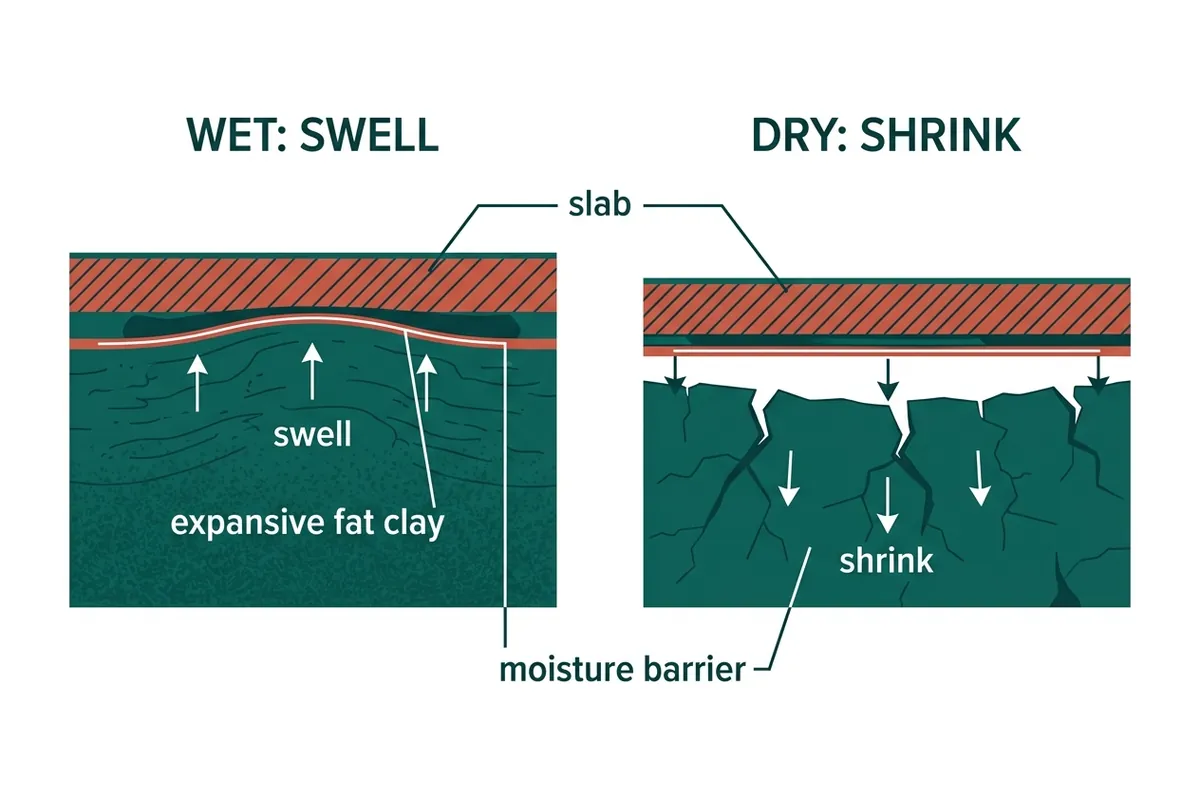
Wichita’s signature ambiguity is direction. The same cracked floor can mean settlement (clay shrank, footing dropped) or heave (moisture arrived, clay lifted the slab) — and on slab homes the evidence hides under flooring while the two repairs point opposite ways. Most of the time the elevation survey resolves it cleanly. When a seller, a bidder, or an adjuster refuses the resolution, that’s no longer a measurement problem — it’s a credibility problem, and independent credibility is precisely what an engineer sells (the insurance page covers the adjuster version of this fight).
When both are on a foundation repair job
On engineered repairs the sequence is clean: the engineer prescribes pier locations, capacities, and any wall design; we install to the prescription and log every pier’s torque or refusal against it; the engineer verifies from the logs. You finish holding a stamped diagnosis, a documented install, and a transferable warranty — the paper stack a future buyer’s inspector wants. What each layer costs sits in the cost guide.
What a report worth paying for contains
Judge the report, not the credential. A useful one carries an elevation survey in numbers rather than adjectives, a stated cause, a specific remedy — pier type, spacing, and the depth or capacity it must reach — and the stamp standing behind all three. On fat clay it should also separate seasonal cycling from true settlement, because the first is managed with moisture and drainage and the second is bought with piers. Confusing them is the most expensive mistake in this market. What you don’t want is a letter restating the cracks you already saw that ends with “consult a foundation contractor.” Keep it for the Kansas seller’s disclosure when the house sells.
Engineer questions, straight answers
Do I need an engineer's report before repair bids in Wichita?
Usually not. A measured contractor evaluation — laser elevations, crack log, wall gauging — is free and generates the same field data an engineer would collect. The engineer's version becomes worth buying when independence itself is the product: a purchase negotiation, a causation dispute with an insurer, or bids that contradict each other.
What's the practical difference in what I receive?
We hand you measurements plus a priced repair scope; an engineer hands you a stamped diagnosis with no repair attached. Same instruments, different incentives — and you should weigh ours knowing we sell the fix. On a straightforward settling ranch the two documents would say the same thing; on a contested case the stamp is the point.
When is the engineer clearly worth it here?
Buying any house with visible movement — especially older College Hill stock where decades of clay cycles are priced into the deal. When one bid says settlement and another says heave, since those repairs point opposite directions on fat clay. When an insurance denial needs a causation opinion. And when severe movement demands a designed, stamped repair.
Slab heave versus settlement — can't your survey settle that?
The survey shows which way the floor moved; on most houses that's decisive and free. The engineer earns the fee when what the movement means is disputed — a seller insisting the hump is 'normal shrinkage,' an adjuster calling heave 'settling.' Our numbers feed that fight, but an independent stamp is what ends it.
Will you install to an engineer's specifications?
Gladly — contested jobs go smoother when the diagnosis is settled before steel arrives. Bring the report and we bid the specified scope line by line, logging each pier's torque or refusal against it. If we think a spec misreads the measurements, we say so in writing to you and the engineer, not by quietly substituting.
Get a free Wichita foundation evaluation
Tell us what the house is doing — a crack that grew, a door that quit closing, a slab that dropped — and we'll schedule an evaluation with photos and crack measurements. We reply the same business day.